Desktop builders
Gamers assembling a first build or moving up from an older card, across 1080p, 1440p, and 4K.
 Mystravale
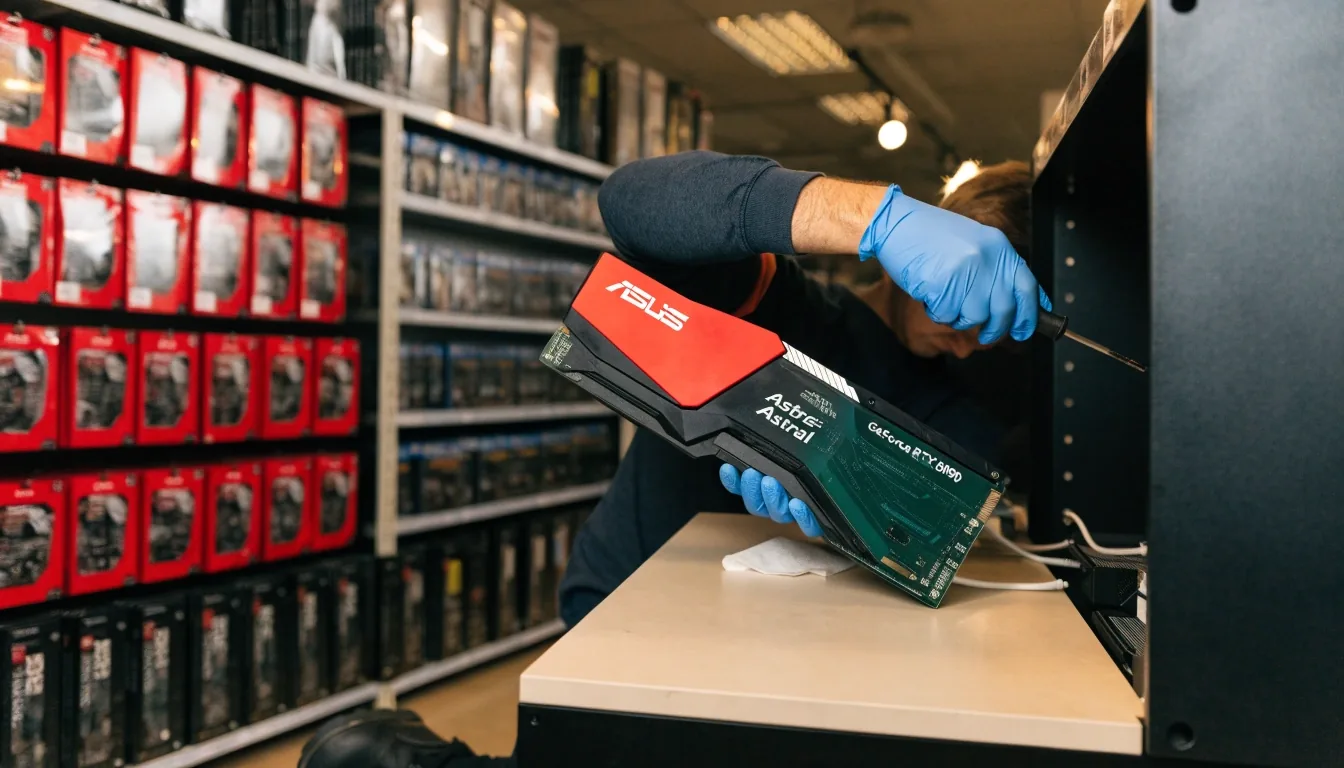
About the shop
A graphics card shop on Teheran-ro, run by people who spend their days comparing coolers, power draw, and what a card is actually worth this month.
A conversation beats a spec sheet.
Mystravale GPU Store is a graphics card shop on Teheran-ro in Gangnam-gu, Seoul. We sell desktop and laptop GPUs and spend most of our time answering questions about them: which card fits a case, which power supply is enough, and which model is actually worth the price this month.
The shop exists because buying a graphics card in a market this volatile rewards a conversation over a spec sheet. Prices move with each global launch, memory supply shifts quietly, and a card that looked sensible in March may not be the one to buy in October. We keep the conversation at the counter for exactly that reason.
Shop address
88, Teheran-ro 87-gil,
Gangnam-gu, Seoul, 06164,
Republic of Korea
Phone
Shop hours
Mon–Sat: 10:00–20:00
We're in the Teheran-ro corridor, within reach of the surrounding computer and electronics trade. That matters for a simple reason: you can see card dimensions and coolers in person before buying. Length, thickness, and how tall a cooler sits above the PCB are the three things that decide whether a card fits your case, and none of them read well off a listing page.
Street parking is limited, so many visitors come by public transport. If you are traveling any distance, phone ahead at +82-2-552-8890 to confirm a specific model is on hand before you make the trip.
See it in hand
Cooler depth, bracket height, and connector position are easier to judge on the counter than in a browser.
Call before you travel
We won't claim a scarce model is waiting on the shelf. A quick call settles it.
Four tiers on the shelf, from an entry card that handles 1080p to a flagship that does not flinch at 4K. Custom AIB boards sit alongside plainer cards.
Intel Arc
Entry level
The starting point for a first build or a 1080p upgrade where budget decides the frame.
AMD Radeon
Midrange, current generation
The sensible 1440p seat. A card we shortlist often because it leaves budget for the rest of the build.
AMD Radeon
Midrange, previous generation
Still on shelves and still worth a look when a previous-generation price lands below the current one.
NVIDIA GeForce
Enthusiast
The enthusiast pick for high-refresh 1440p and careful 4K settings.
NVIDIA GeForce
Flagship
The top of the shelf. We ask what you run before we hand one over — it is a lot of card.
Custom AIB cards from partners including ZOTAC and ASUS sit alongside plainer boards, and the difference is usually cooler size, fan count, and how aggressive the factory profile runs. We also advise on the RTX 5070 Laptop GPU for buyers shopping for gaming notebooks, where the same chip name can behave very differently depending on the laptop's cooling and power limit.
If you are choosing between two tiers
Bring your monitor resolution and your power supply model to the counter. More often than not the smaller card is the right answer, and it costs less to find that out here than after the box is open.
Browse the graphics cards catalogAdvice here starts with your build, not with the most expensive card on the shelf. We ask about your monitor resolution, your case, your power supply, and the games or applications you actually run. From there we shortlist two or three options and explain the trade-offs in plain terms. If a cheaper card serves you just as well, we say so.
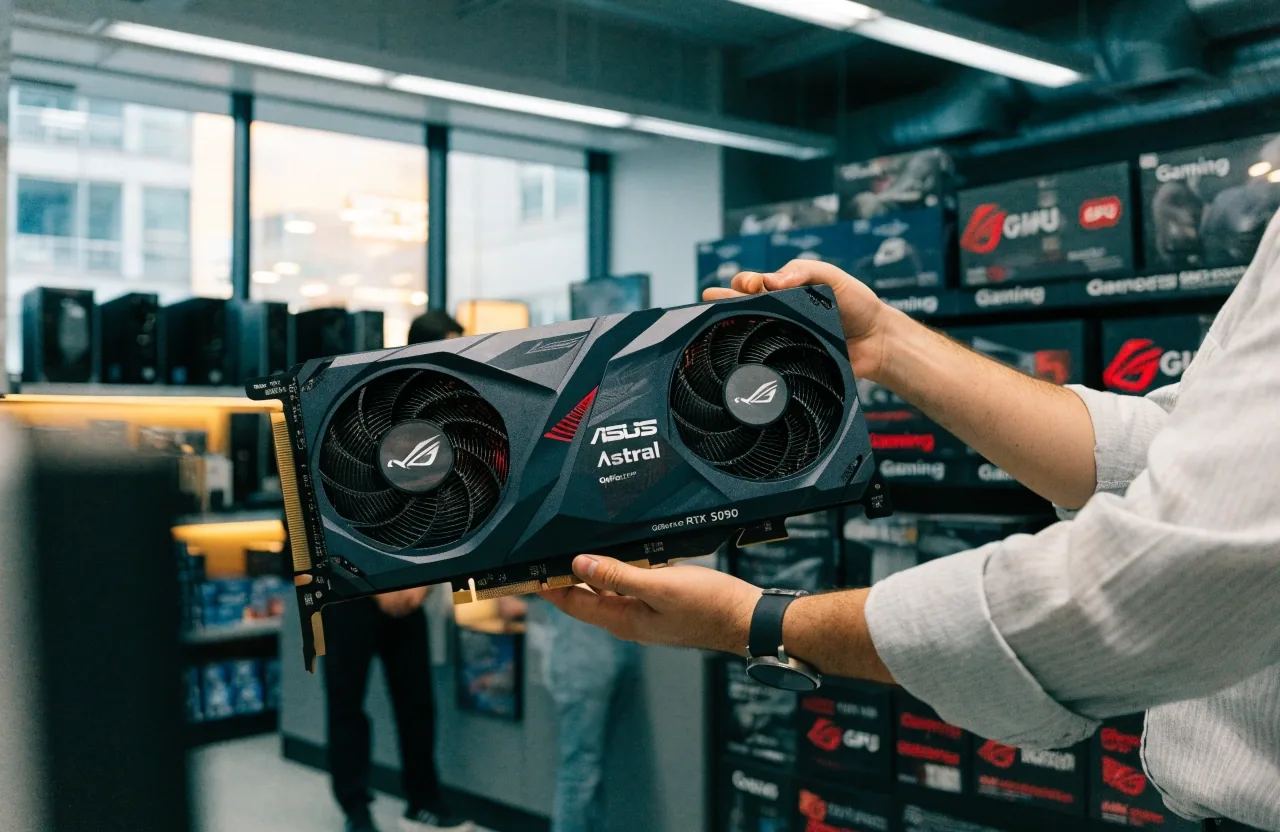
Two cards, one bench.
Fan count and stack thickness are the honest difference between tiers. Length and cooler height decide whether your case takes them.
Step one
Tell us the monitor, the case, and the power supply. If you are unsure of the model, a photo of the label or the wattage figure is enough to start.
Step two
Say what you actually run — the game, the editor, the render engine. We ask because a card that is right for one is often wrong for another.
Step three
We shortlist two or three cards and talk through the trade-offs, including the cheaper one. You leave with a specific recommendation, not a catalogue.
We don't publish a fixed price list, because a number posted today can be wrong by next week.
GPU prices in Korea move with global launches, memory supply, and retail stock. Instead of a shelf tag we would have to redraw every week, we quote current prices when you ask and explain what is driving them. That keeps the figures you act on accurate rather than convenient.
Check stock on a specific modelMost of our customers are gamers building or upgrading a desktop PC, from 1080p first builds to 4K setups.
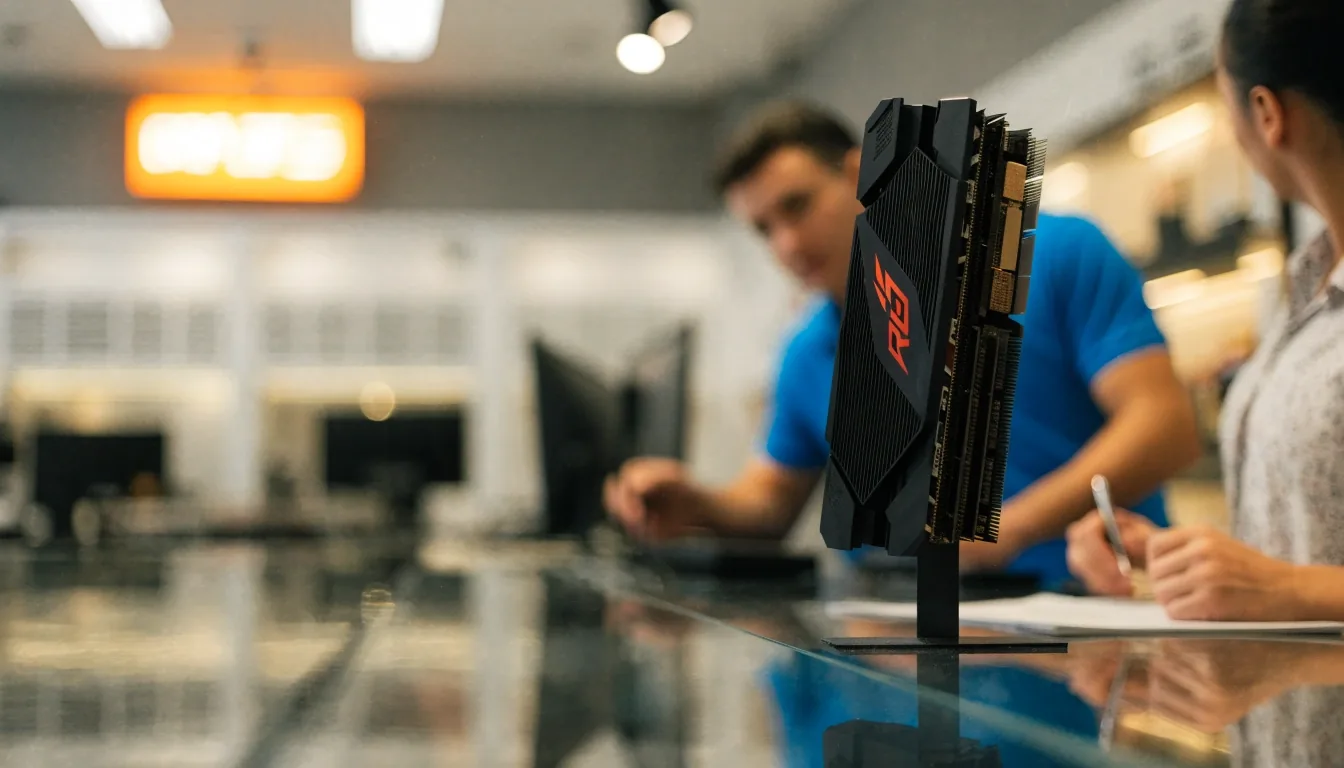
First-time builders get the same time as experienced ones, because the questions are usually the same. What fits, what is enough power, and what is worth paying for right now.
Desktop builders
Gamers assembling a first build or moving up from an older card, across 1080p, 1440p, and 4K.
Creators
Video editing, 3D rendering, and AI workloads where GPU acceleration shortens the working day, not the game night.
Laptop buyers
Comparing portable options, where the same GPU name can behave differently depending on cooling and power limits.
A short list, kept short on purpose. It saves you a trip and saves us a conversation that goes nowhere.
We don't guarantee stock on scarce models. Stock is real and it moves; a promise we can't keep helps nobody.
We won't promise a price will hold when the market is moving, because it may not.
We don't push flagship cards on people who don't need them. A lot of builds stop well short of the top of the shelf.
We don't pretend an entry-level GPU will handle 4K gaming. It won't, and telling you otherwise costs you a return trip.
If we can't help with a specific model, we'll tell you rather than waste your trip.
You can reach us by phone at +82-2-552-8890, by email at [email protected], through the contact form, or in person during shop hours.
Bring your case measurements, power supply model, and current build specs if you have them. That turns a general conversation into a specific recommendation. If you're traveling a distance, call first to confirm availability.
Shop hours: Mon–Sat: 10:00–20:00. Address: 88, Teheran-ro 87-gil, Gangnam-gu, Seoul, 06164, Republic of Korea.
Beautiful numbers on a spec sheet don't survive a badly chosen card.
Mystravale GPU Store is a graphics card shop in Gangnam-gu, Seoul, serving desktop builders, creators, and laptop buyers. Come in with your build details, or phone first if a specific card is what you're after.